
Mathematics
Mathematics courses at Roman Catholic High School challenge young men to develop analytical thinking and problem-solving skills, while preparing them for futures in STEM, business, and more.
With ample test preparedness and confidence-building experiences, students at Roman graduate ready to excel in every aspect of mathematics they encounter.
Math Department Chair
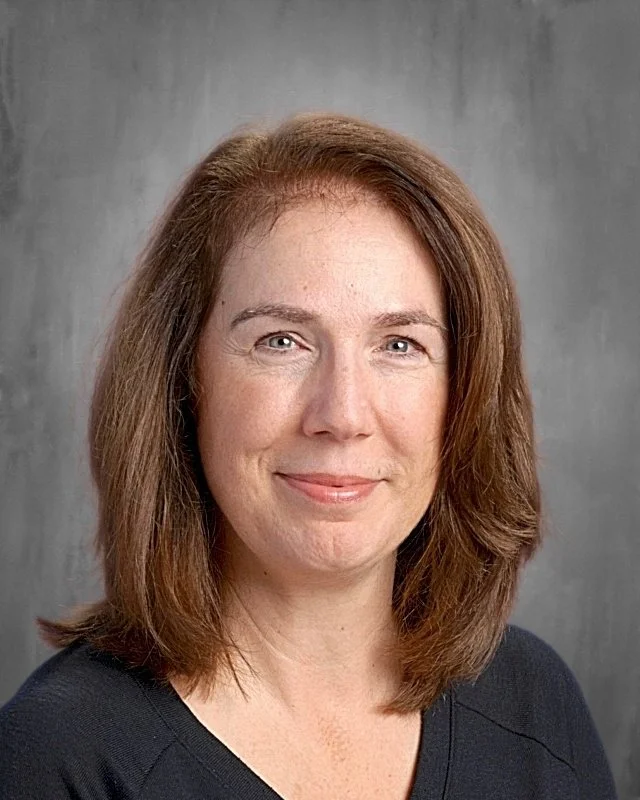
Mrs. Ana Barun
Math teachers
Mrs. Ana Barun
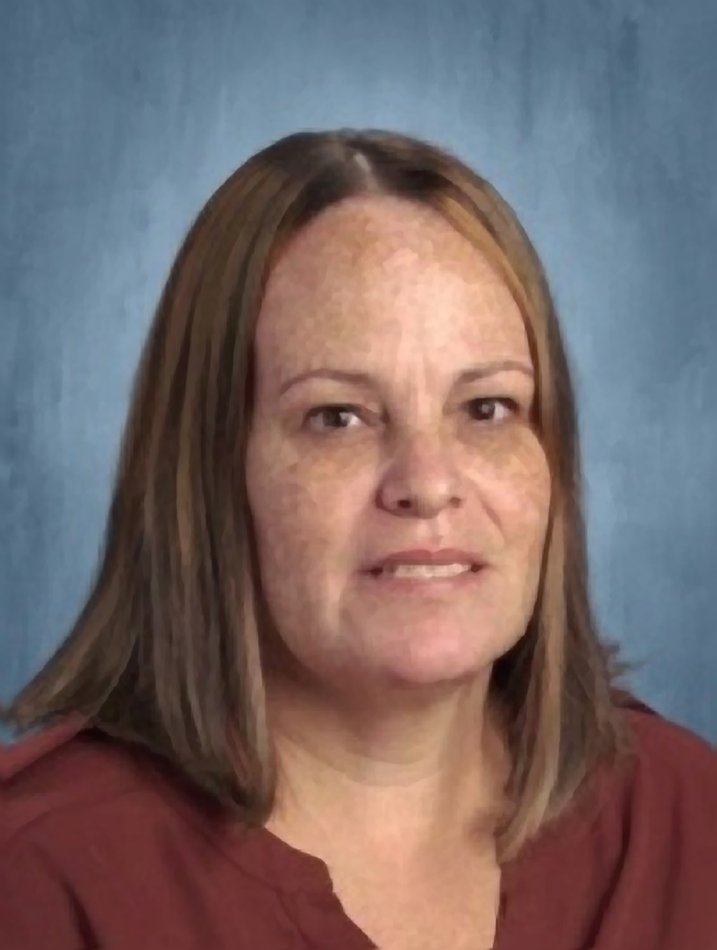
Ms. Andrea Commentucci
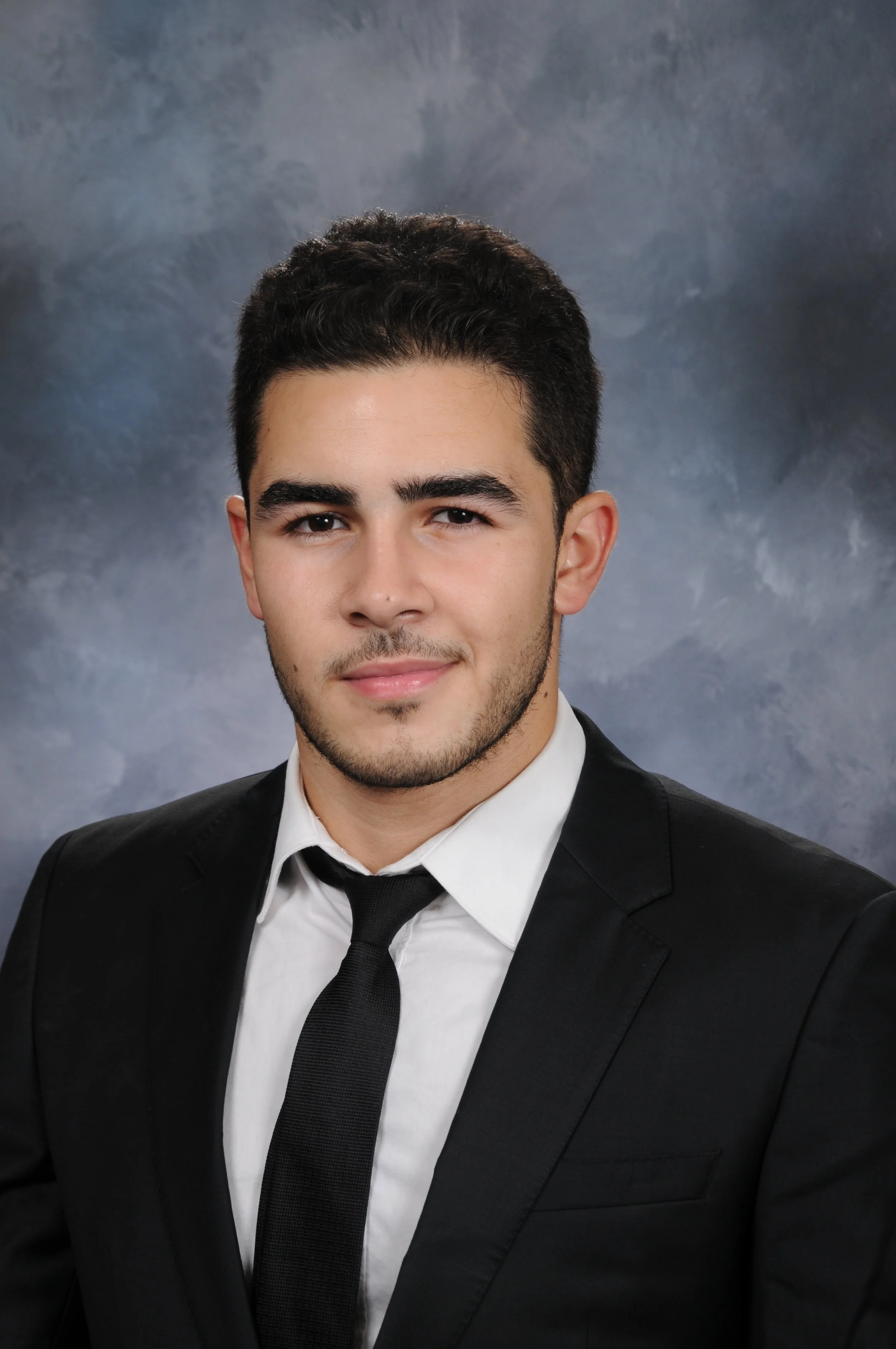
Dr. Hichem Bouchamaoui

Mr. Joseph Lutman

Mr. Joshua Wagner '91
Math courses
Algebra I
-
This course meets the needs of those students who have superior mathematical capabilities, as demonstrated by their performance on the RCHS placement test, the Terra Nova test, and elementary school transcripts. It introduces the important aspects of algebra and develops an appreciation of civilization’s dependence on mathematics. Topics from geometry will be introduced.
-
This course meets the needs of those students who have an above average ability in mathematics as demonstrated by their performance on the RCHS placement test, the Terra Nova test, and elementary school transcripts. It introduces the important aspects of algebra and develops an appreciation of civilization’s dependence on mathematics.
-
This course meets the needs of those students who have an average ability in mathematics, as demonstrated by their performance on the RCHS placement test, the Terra Nova test, and elementary school transcripts. The students will receive a firm mathematical foundation, which will significantly contribute to their ability to function effectively in a technical environment.
Algebra II
-
This course builds on the foundation laid in Honors Algebra I, providing a continuation in quadratics, complex numbers, and simultaneous equations. Students will study conic sections, probability, matrices, and the fundamentals of plane and solid geometry.
-
An intermediate course for those students with above average abilities in mathematics who are preparing for college. The course continues where Algebra I finishes and introduces quadratics, complex numbers, simultaneous equations, the parabola, circle, ellipse, and hyperbola. Stress is placed on solving word problems.
-
This course prepares students for college who have average abilities in mathematics. It reviews and strengthens the concepts treated in Algebra I, especially equations of first and second degree. Irrational numbers and the quadratic formula are introduced. Stress is placed on applying algebraic equations to everyday life.
Geometry
-
For students with advanced mathematical capabilities, this course covers terminology, construction, and reasoning, as well as distance, area, volume, congruence, and similarity. Solid geometry, coordinate, and space geometry are treated. Critical thinking is an integral part of the course.
-
Terminology, construction, and reasoning are used with triangles and circles. Congruence, similarity, area, and volume are stressed. Proofs are introduced. Solid geometry is treated. Critical thinking is a very important part of this course.
-
This course provides a useful mathematical foundation for those whose plans include attendance at a business school or in a program of a technical nature. Generally, content is comparable to that of the higher tracks, but the material is presented in a manner that allows the student to learn at his own pace. Greater effort is placed in practice and reinforcement of important concepts; remediation is used as needed.
Pre-Calculus
-
This course prepares the students for the rigors of AP Calculus senior year. The properties of trigonometric functions and their graphs, trigonometric identities and equations, the Laws of Sines and Cosines, and vector applications are covered along with the properties of exponential and logarithmic functions, the straight line and conic functions. Please note that a T.I. graphing calculator is required.
-
This course prepares the students for the rigors of Calculus senior year. The properties of trigonometric functions and their graphs, trigonometric identities and equations, the Laws of Sines and Cosines, and vector applications are covered along with the properties of exponential and logarithmic functions, the straight line and conic functions. Please note that a T.I. graphing calculator is required.
Calculus
-
AP Calculus deals with the differentiation and integration of the algebraic, trigonometric and other transcendental functions and their applications, including curve sketching, optimization problems, areas, volumes, and related rates. All students will be required to take and pay for the Advanced Placement Examination. Please note that a T.I. graphing calculator is required.
Statistics
-
In this course, students will be introduced to the major concepts of probability, interpretation of data, and statistical problem solving. Students will analyze existing data as well as data collected through a survey, observational study, or experiment. They will then display the data in different ways, analyze it, and draw conclusions based on the results.